What is the Callan Method?
The Callan Method was created by Robin Keith Terence Callan, who began developing it at the end of the 1950s in Italy and refined it over many years in the classroom. It is a direct method: the lesson happens entirely in English, and the teacher asks you question after question, so you hear and use the language for the whole lesson.
Vocabulary and grammar are introduced in a carefully planned order and reviewed again and again. You learn by answering, being corrected and repeating, until you can respond without stopping to translate.
According to the Callan Method’s own materials, a student can reach the level of the B1 Preliminary exam in about 80 hours of lessons and the B2 First in about 160 hours, far fewer than with conventional courses. Your real pace depends on how often you study and how much you review.
What happens in a lesson
The teacher asks you questions
Each question practises a word, an expression or a point of grammar. As soon as you finish answering, the next question comes.
The teacher speaks fast
People speak quickly in real life, so you practise understanding English at natural speed. This also stops you translating in your head: you start thinking in English.
Each question is asked twice, and you get help with the answer
The teacher repeats the question and immediately gives you the beginning of the answer, so you start speaking straight away. If you hesitate, the teacher gives you the next word and you carry on.
Teacher: Are there two chairs in this room? Are there two chairs in this room? No, there aren’t…
Student: No, there aren’t two chairs in this room; there are twelve chairs in this room.
Full answers with the same grammar as the question
You always answer with a complete sentence that repeats the structure of the question. That way you practise the vocabulary and grammar you need, not just a quick “yes” or “no”.
Correction by imitation
Every mistake is corrected the moment you make it. The teacher imitates your mistake and then says the correct form (“not come: comes”), so you can hear the difference, repeat it and continue.
Contractions, like real spoken English
The teacher uses forms like I don’t and there aren’t, because that is how people speak. You learn to understand and use them naturally.
50 minutes of English, without silence
A typical 50-minute lesson has about 35 minutes of oral practice, 10 minutes of reading and 5 minutes of dictation. There is no time for small talk: free conversation only uses the English you already know and makes correction difficult. In a Callan lesson you are always listening, speaking and learning from corrections.
Systematic review
In a foreign language you need to hear and use a word many times before it becomes yours. Every lesson combines review with new material. A new word first appears in the oral practice, a few lessons later in the reading and finally in a dictation. Because of this, you don’t need to understand everything the first time: it gets easier with each review.
The 12 stages and the CEFR
The course is divided into 12 stages, from complete beginner to advanced. At the end of each stage there is a short test with three parts: questions, vocabulary and dictation. The comparison below with the Common European Framework of Reference (CEFR) and the Cambridge English exams is approximate.
| Callan stages | CEFR level | Cambridge exam |
|---|---|---|
| 1–2 | Pre-A1 to A1 | – |
| 3–4 | A2 | A2 Key (KET) |
| 5–6 | B1 | B1 Preliminary (PET) |
| 7–9 | B2 | B2 First (FCE) |
| 10–12 | C1 | C1 Advanced (CAE) |
For work in Switzerland and across Europe, people are usually considered fluent at B2–C1, which corresponds to Stages 10 to 12. We recommend studying at least until the end of Stage 9.
How often should you study?
The more lessons per week, the faster you progress and the less you forget between lessons. Three or more lessons a week works well; with only one or two, the course takes much longer. Homework is not required, but reviewing the book and your lesson recordings will help you finish sooner.
Robin Callan, the creator of the method
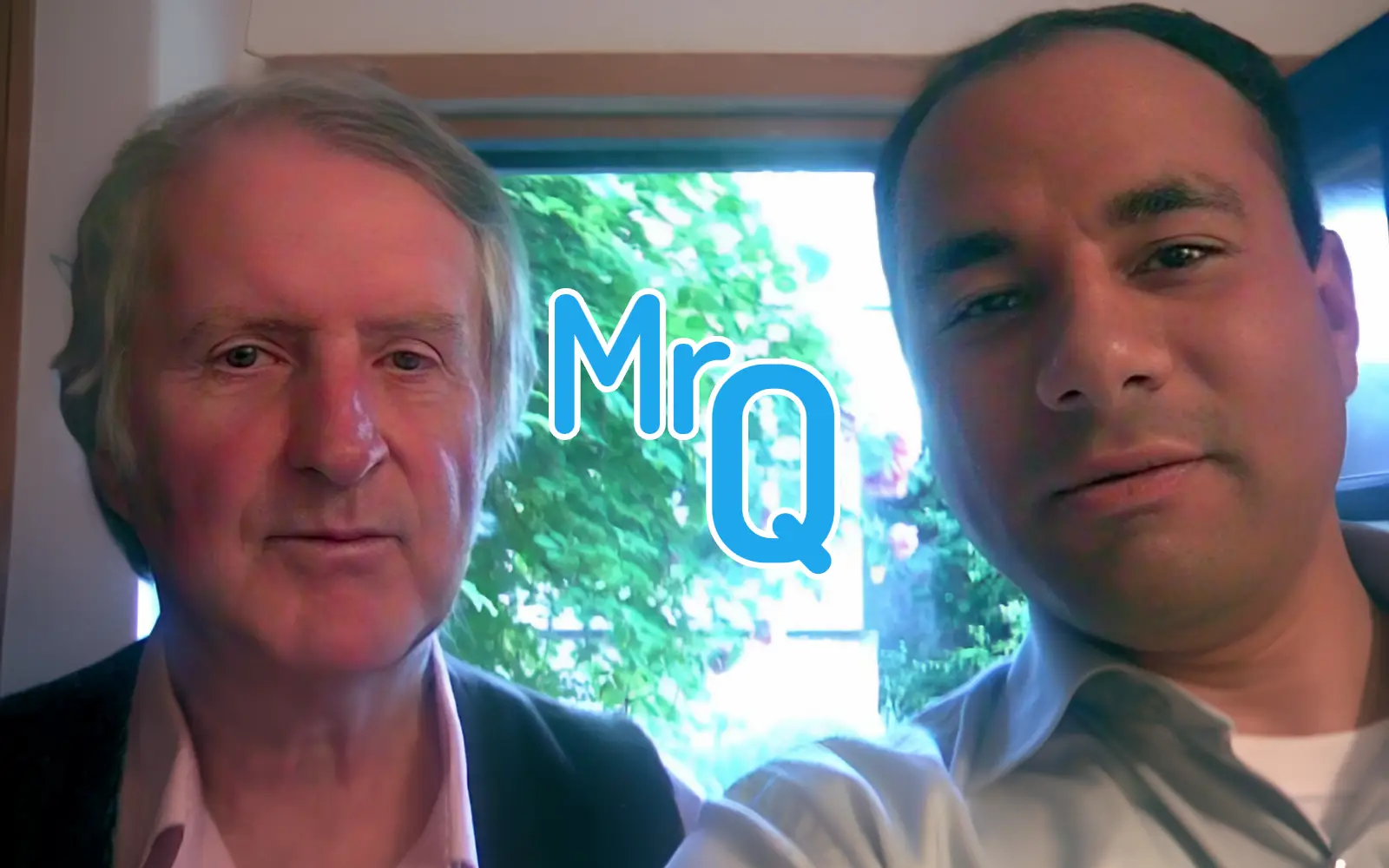
Robin Keith Terence Callan was born on 3 October 1932 in Ely, Cambridgeshire. In 1959 a friend invited him to teach English for a few months at a language school in Salerno, Italy. He enjoyed teaching but found the methods of the time slow and boring, so he set out to create his own. It took him about ten years to develop the method in its original form, testing it in his own school. By 1969 he had established more than ten schools in Italy and one in England.
Robin Callan also loved English literature. In 1992 he bought the Orchard Tea Garden in Grantchester, near Cambridge, and saved it from redevelopment, preserving a place once visited by Rupert Brooke, Virginia Woolf and Alan Turing. He was diagnosed with Parkinson’s disease in 2007 and died on 11 April 2014. His method lives on in the schools and teachers who use it around the world.
Robin Callan personally recommended Mr Q in 2000 after listening to recordings of his lessons. Read his recommendation.